
How To Spend 15 Days In Vietnam: A Complete Itinerary For First-Time Visitors
Content []
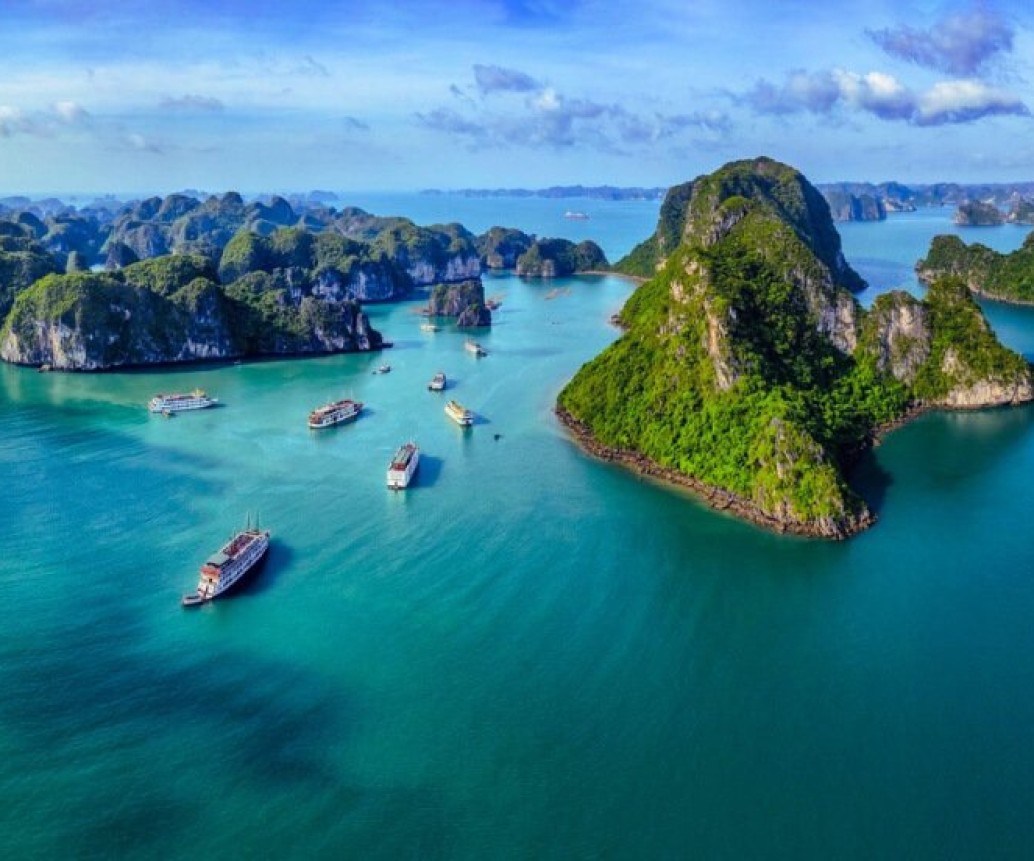
If you are planning your first visit, a 15 days in Vietnam itinerary provides an excellent opportunity to explore the country's three main regions without rushing through every destination.
This travel guide takes you from Northern to Southern Vietnam, covering Hanoi, Ha Long Bay, Ninh Binh, Sapa, Hoi An, Hue, Ho Chi Minh City and the Mekong Delta. You will find a detailed day-by-day itinerary, transportation advice, estimated travel expenses, seasonal recommendations and practical tips to help you plan your journey.
Whether you prefer cultural discoveries, beautiful landscapes, local food or outdoor activities, this 15-day Vietnam itinerary will help you make the most of your time in the country.
Table of Contents
- 1. Is a 15-Day Trip Ideal for Experiencing Vietnam?
- 2. Vietnam 15-Day Itinerary: Route Overview
- 3. Detailed 15-Day Vietnam Itinerary
- Days 1–2: Discover Hanoi – Vietnam's Capital
- Day 3: Explore Ha Long Bay on an Overnight Cruise
- Days 4–5: Discover Ninh Binh – Vietnam's Inland Beauty
- Days 6–7: Experience Sapa and Conquer Fansipan Mountain
- Day 8: Fly to Da Nang and Discover Hoi An
- Day 9: Experience Hoi An's Countryside, Basket Boats and Local Cooking
- Day 10: Travel from Hoi An to Hue via Hai Van Pass
- Day 11: Explore Hue's Imperial Heritage and Traditional Craft Villages
- Day 12: Fly to Ho Chi Minh City and Enjoy a Saigon Street Food Tour
- Days 13–14: Experience the Mekong Delta – Ben Tre and Can Tho
- Day 15: Departure from Ho Chi Minh City
- 4. How to Travel Around Vietnam in 15 Days?
- 5. How Much Does a 15-Day Trip to Vietnam Cost?
- 6. Best Time to Visit Vietnam for 15 Days
- 7. Practical Travel Tips for First-Time Visitors
- 8. Common Mistakes to Avoid When Traveling in Vietnam
- 9. Frequently Asked Questions About a 15-Day Trip to Vietnam
- Is 15 Days Enough to Explore Vietnam?
- How Much Money Do I Need for 15 Days in Vietnam?
- Should I Travel from North to South or South to North Vietnam?
- Are Domestic Flights Included in the USD 1,258 Vietnam Tour Package?
- What Is the Best Time to Visit Vietnam for 15 Days?
- Can I Visit Hanoi, Sapa, Ha Long Bay, Hoi An and the Mekong Delta in One Trip?
- Is This 15-Day Vietnam Itinerary Suitable for First-Time Visitors?
- 10. Explore Vietnam with Auasia Travel
1. Is a 15-Day Trip Ideal for Experiencing Vietnam?
Yes! Fifteen days is a good amount of time to experience Vietnam's major highlights across Northern, Central and Southern Vietnam.
Each region offers a distinctive travel experience:
- Northern Vietnam: Discover the cultural heritage of Hanoi, cruise through Ha Long Bay, explore the limestone landscapes of Ninh Binh and experience the mountain scenery of Sapa.
- Central Vietnam: Visit the charming streets of Hoi An, enjoy coastal scenery along Hai Van Pass and discover the imperial heritage of Hue.
- Southern Vietnam: Experience the energetic atmosphere of Ho Chi Minh City and explore the traditional river communities of the Mekong Delta.
Although 15 days cannot cover every destination in Vietnam, it allows you to combine several iconic attractions with meaningful local experiences.
The key is to plan a realistic route, consider travel times between destinations and leave enough time to enjoy each place rather than spending most of your holiday on the road.
For first-time visitors who want to experience different landscapes, cultures and regional cuisines, this is an excellent way to discover Vietnam.
2. Vietnam 15-Day Itinerary: Route Overview
This itinerary starts in Hanoi and finishes in Ho Chi Minh City, covering the country's most popular destinations from north to south.
The journey combines private road transfers, domestic flights, an overnight Ha Long Bay cruise and traditional local transportation experiences.
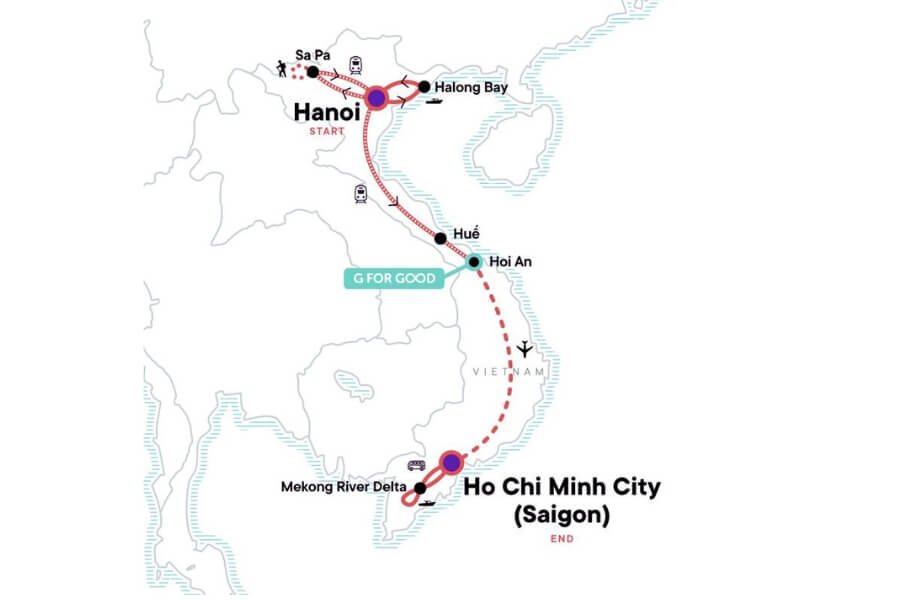
Vietnam 15-Day Itinerary at a Glance
Day | Destination | Main Experiences |
1 | Hanoi | Arrival and Hanoi Jeep Tour |
2 | Hanoi | Cultural and historical sightseeing |
3 | Ha Long Bay | Overnight cruise, caves and kayaking |
4 | Ha Long Bay – Ninh Binh | Titov Island and transfer to Tam Coc |
5 | Ninh Binh – Hanoi | Mua Cave, Trang An and Bai Dinh Pagoda |
6 | Hanoi – Sapa | Cat Cat Village and Moana Sapa |
7 | Sapa – Hanoi | Fansipan Cable Car and summit |
8 | Hanoi – Da Nang – Hoi An | Domestic flight and transfer to Hoi An |
9 | Hoi An | Basket boat, farming and cooking experience |
10 | Hoi An – Hue | Hai Van Pass and Hue sightseeing |
11 | Hue | Imperial City and traditional craft village |
12 | Hue – Ho Chi Minh City | Domestic flight and Saigon street food tour |
13 | Ho Chi Minh City – Ben Tre – Can Tho | Mekong Delta countryside experience |
14 | Can Tho – Ho Chi Minh City | Floating market and local workshops |
15 | Ho Chi Minh City | Free time and departure |
Main Destinations on the Route
Northern Vietnam: Hanoi → Ha Long Bay → Ninh Binh → Hanoi → Sapa → Hanoi.
Central Vietnam: Hanoi → Da Nang → Hoi An → Hue.
Southern Vietnam: Hue → Ho Chi Minh City → Ben Tre → Can Tho → Ho Chi Minh City.
Two domestic flights connect the main regions:
- Hanoi to Da Nang on Day 8.
- Hue to Ho Chi Minh City on Day 12.
These flights reduce long-distance road travel and make the overall journey more manageable.
One important detail is that the northern itinerary includes returns to Hanoi after Ninh Binh and Sapa. These connections are part of the planned route and should be considered when arranging transportation.
3. Detailed 15-Day Vietnam Itinerary
Days 1–2: Discover Hanoi – Vietnam's Capital
Day 1: Arrival in Hanoi and Hanoi Jeep Tour
Your journey begins in Hanoi, Vietnam's capital and one of Southeast Asia's most fascinating cities.
Upon arrival at Noi Bai International Airport, meet your driver for a private transfer to your hotel in central Hanoi.
After checking in and taking some time to rest, you may join a guided Hanoi Jeep Tour, depending on your flight arrival time and the tour schedule.
Travel through lively streets and local neighborhoods while observing the city's everyday life from a different perspective.
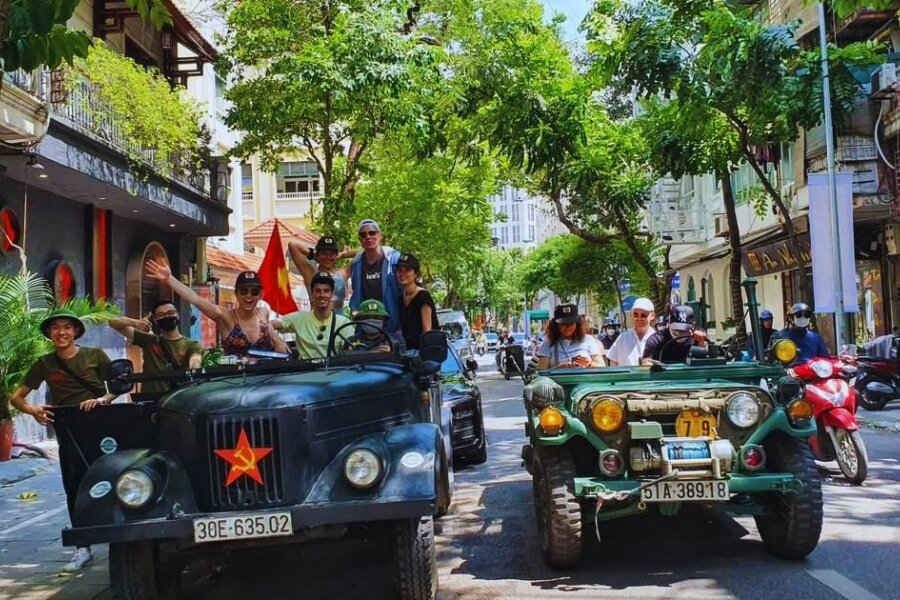
Lunch or dinner will be arranged according to your arrival time. Only one of these meals is provided on the arrival day.
After the tour, return to your hotel and enjoy the remainder of the evening at leisure.
Overnight: Hanoi.
Day 2: Hanoi Cultural and Historical Discovery
Spend your second day exploring Hanoi's history, architecture and local culture.
Begin at Ba Dinh Square, an important landmark associated with Vietnam's modern history. Continue to Tran Quoc Pagoda, one of the city's historic Buddhist landmarks, situated beside West Lake.
Next, visit the Vietnam Museum of Ethnology to learn about the traditions, lifestyles and cultural diversity of Vietnam's ethnic communities.
After lunch at a local restaurant, explore Hoa Lo Prison, a historical site that offers insight into Vietnam's colonial period and wartime history.
In the afternoon, enjoy a Vietnamese Egg Coffee Experience at a local café. Discover how this distinctive Hanoi specialty is prepared before making and tasting your own cup.
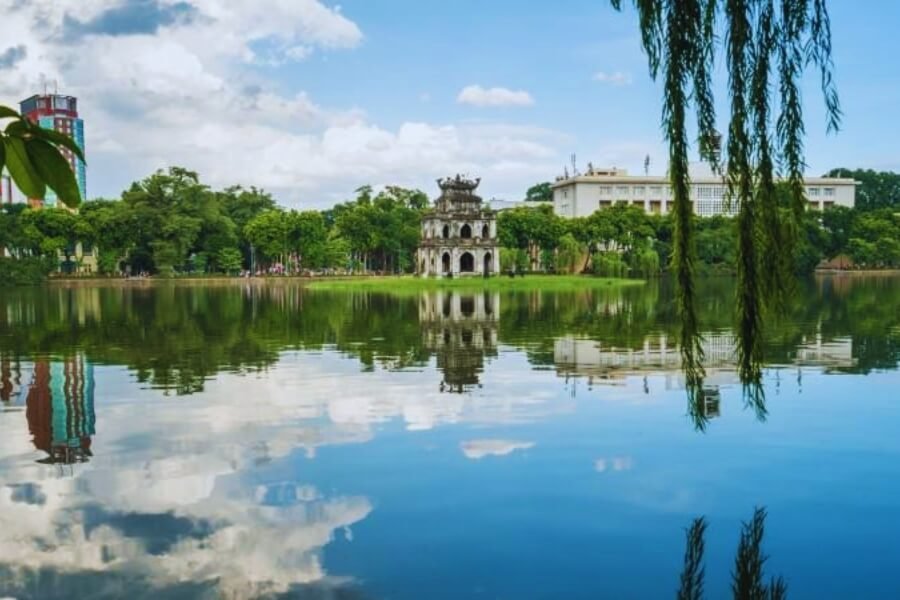
The evening is free for you to explore Hanoi independently or sample more local street food.
Overnight: Hanoi.
Day 3: Explore Ha Long Bay on an Overnight Cruise
Leave Hanoi in the morning and travel to Ha Long Bay, one of Vietnam's most celebrated natural destinations.
Upon arrival at Tuan Chau Harbor around midday, board your overnight cruise and enjoy a welcome drink while the cruise manager introduces the vessel and the day's activities.
Lunch is served on board as the cruise sails among spectacular limestone islands and emerald-green waters.
In the afternoon, visit Sung Sot Cave, also known as Surprise Cave. Explore its impressive chambers filled with stalactites and stalagmites.
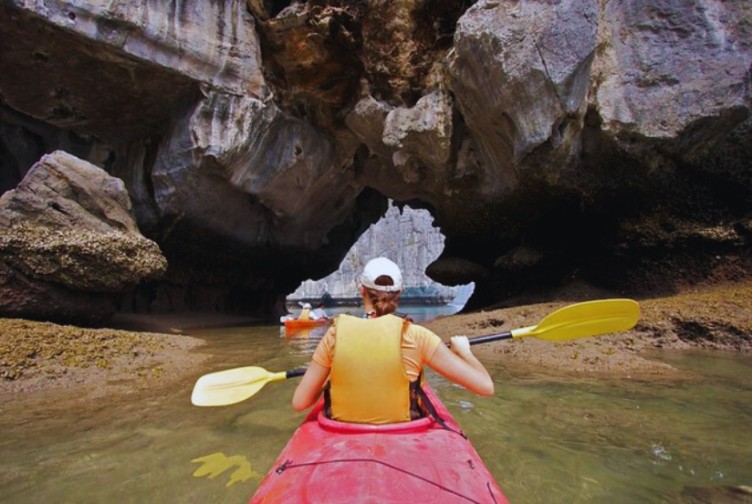
Continue to Luon Cave, where you can explore the peaceful waterway by kayak or traditional bamboo boat.
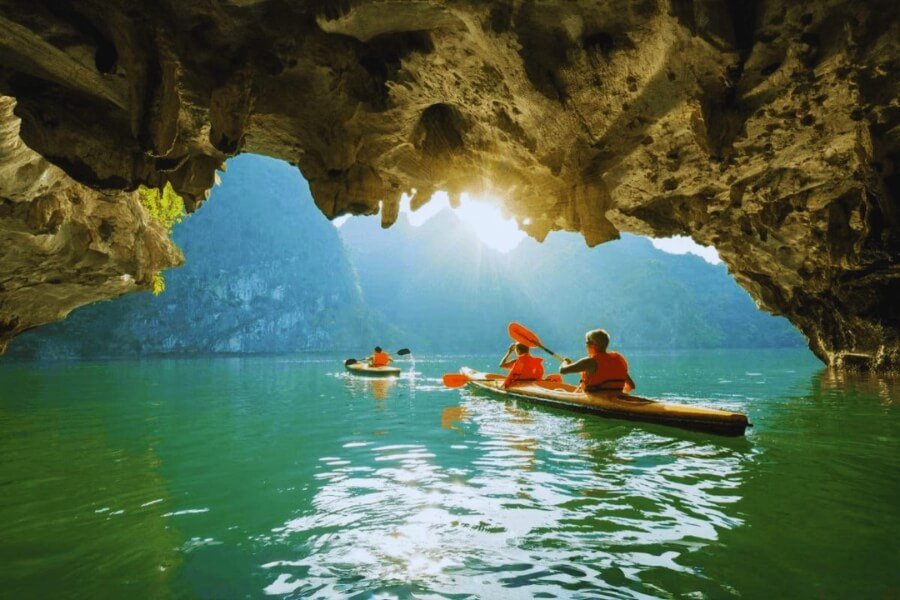
Return to the cruise in the late afternoon and enjoy Happy Hour while admiring the surrounding limestone scenery.
You can also join an onboard Vietnamese cooking class to learn how to prepare a traditional dish.
Dinner is served on board, followed by free time to relax or participate in optional evening activities.
Spending a night on Ha Long Bay allows you to appreciate the peaceful atmosphere of the bay after many daytime sightseeing boats have departed.
Overnight: Ha Long Bay cruise.
Note: Cruise schedules and activities may change depending on weather, tides and operational conditions.
Days 4–5: Discover Ninh Binh – Vietnam's Inland Beauty
Day 4: Ha Long Bay to Ninh Binh
Wake up early to enjoy the peaceful morning scenery of Ha Long Bay. You may also join an optional Tai Chi session on the cruise sundeck.
Travel by tender boat to Titov Island, where active travelers can climb toward the viewpoint for panoramic views across the bay. Alternatively, relax on the beach or enjoy the scenery from a lower viewing area.
Return to the cruise for brunch as the vessel sails back toward Tuan Chau Harbor.
After disembarking, meet your driver for a transfer to Ninh Binh.
Upon arrival in Tam Coc, check into your hotel and enjoy the remainder of the afternoon at leisure.
Overnight: Tam Coc, Ninh Binh.
Day 5: Mua Cave, Trang An and Bai Dinh Pagoda
Start the day with a visit to Mua Cave, one of Ninh Binh's most recognizable viewpoints.
Climb the stone staircase toward the mountain viewpoint for panoramic views of limestone peaks, rivers and surrounding rice fields.
The climb requires moderate physical effort, so comfortable walking shoes, drinking water and sun protection are recommended.
Continue to Trang An Scenic Landscape Complex, where you will board a traditional sampan boat and travel through peaceful waterways, limestone valleys and natural caves.
This journey offers a wonderful opportunity to appreciate Ninh Binh's natural scenery from the water.
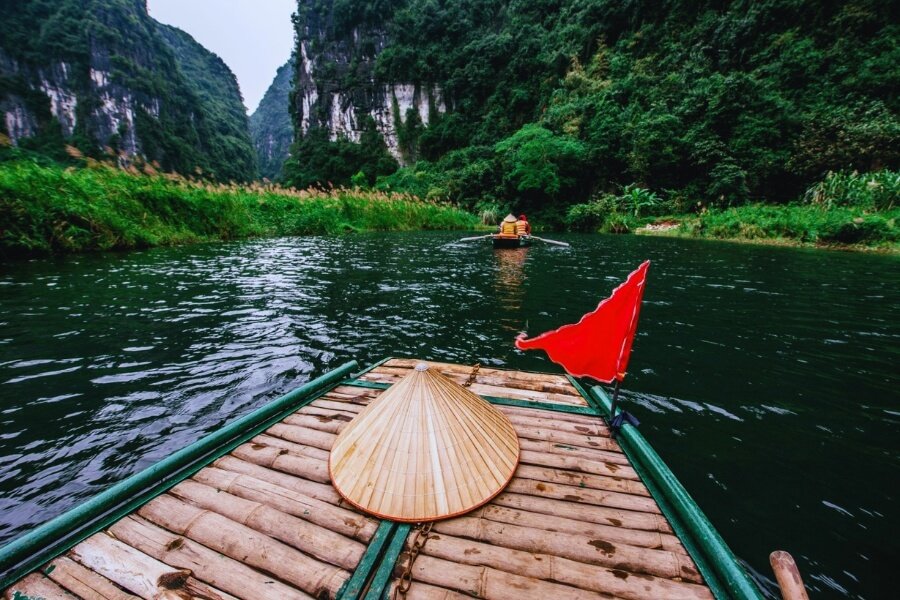
After lunch at a local restaurant, visit Bai Dinh Pagoda, an extensive Buddhist complex surrounded by limestone mountains.
In the late afternoon, return to Hanoi by private transfer.
Overnight: Hanoi.
Days 6–7: Experience Sapa and Conquer Fansipan Mountain
Day 6: Hanoi to Sapa – Discover Cat Cat Village
After breakfast, leave Hanoi and travel north toward Sapa, passing through changing countryside and mountain scenery.
Upon arrival, enjoy lunch at a local restaurant before beginning your afternoon sightseeing.
Visit Cat Cat Village, a traditional H'Mong community located in Muong Hoa Valley.
Walk along village paths surrounded by mountain scenery while learning about H'Mong culture, traditional houses and everyday life in the northern highlands.
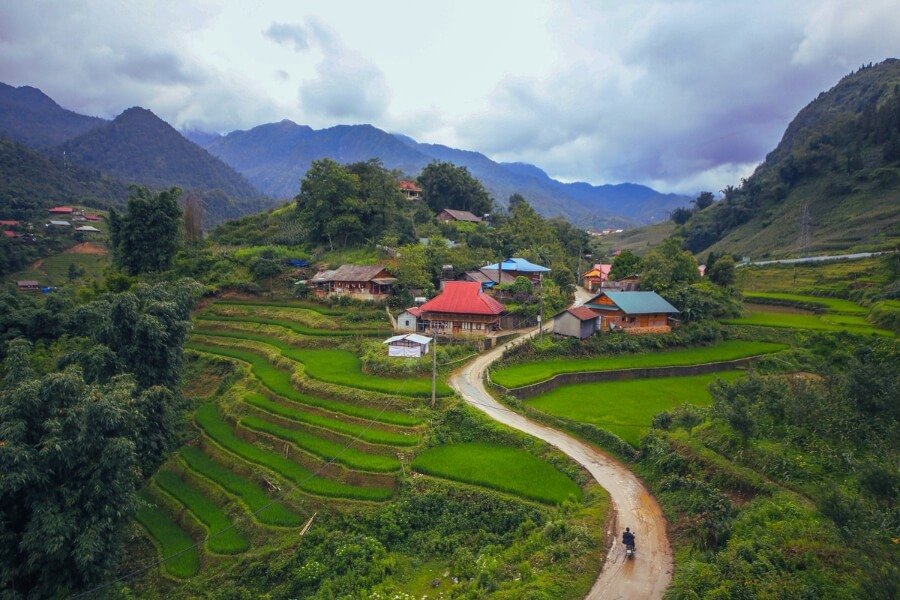
The route includes slopes, steps and some uneven sections, so comfortable walking shoes are recommended.
Continue to Moana Sapa, where you can enjoy scenic views across the surrounding mountains and valleys.
After checking into your hotel, the evening is free for you to relax or explore Sapa Town independently.
Overnight: Sapa.
Day 7: Fansipan Cable Car and Summit Experience
Today, discover Fansipan Mountain, which reaches 3,143 meters above sea level and is widely known as the highest peak in Vietnam.
After breakfast, travel to the cable car station and begin your scenic journey above Muong Hoa Valley.
Enjoy impressive views across the Hoang Lien Son mountain range as the cable car takes you toward the upper station.
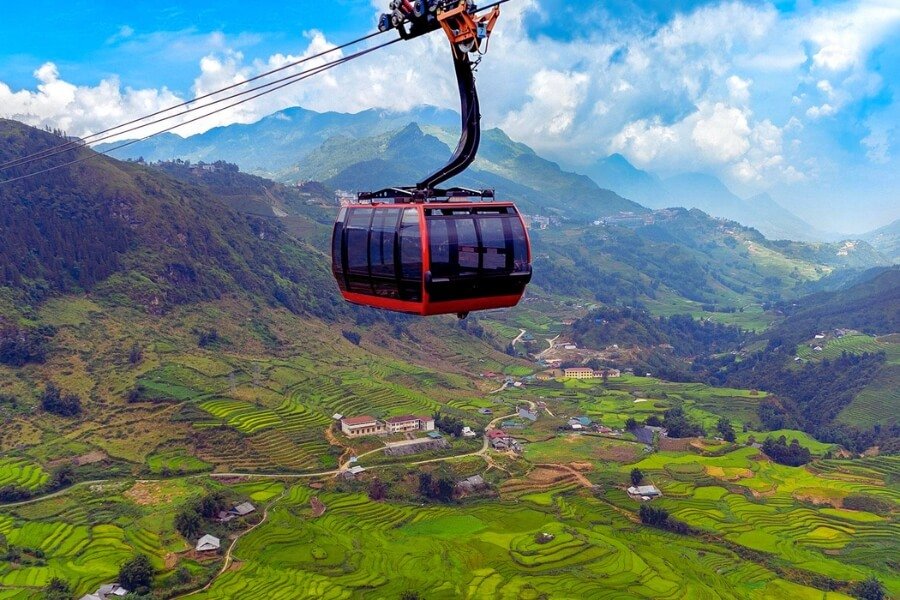
After arriving, continue on foot along mountain pathways and stone steps through the spiritual complex toward Fansipan Summit.
The final ascent requires moderate physical effort, particularly because of the altitude and number of steps. Travelers who prefer not to complete the entire walk may use an available mountain transport option for part of the final climb.
After enjoying the summit scenery, descend and have a buffet lunch before beginning the return journey to Hanoi.
Arrive in Hanoi later in the day and enjoy the evening at leisure.
Overnight: Hanoi.
Day 8: Fly to Da Nang and Discover Hoi An
After breakfast, transfer to Noi Bai International Airport for your domestic flight from Hanoi to Da Nang.
Upon arrival, meet your driver for a private transfer to Hoi An.
After checking into your hotel, the remainder of the day is free for you to relax or explore independently.
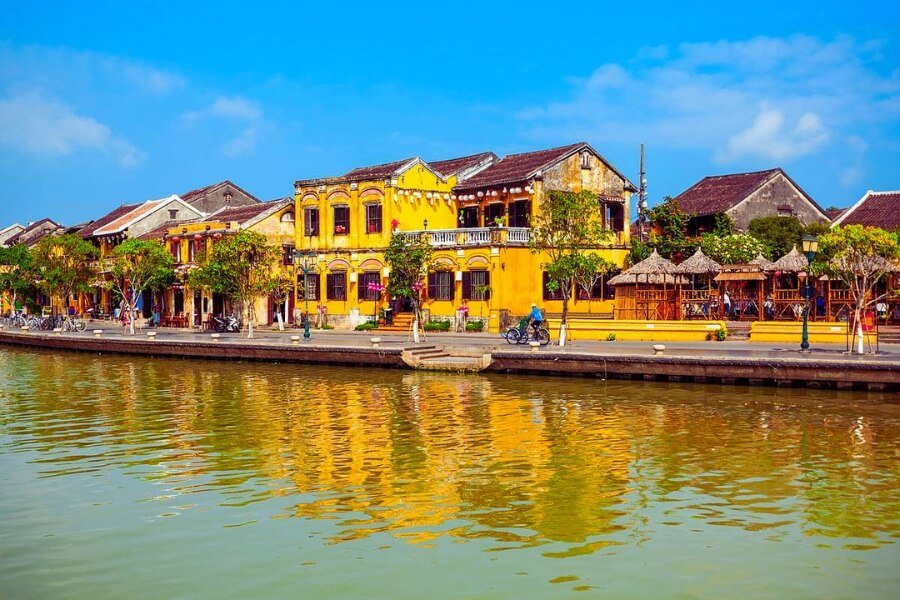
You may wander through the lantern-lit streets of Hoi An Ancient Town, enjoy the riverside atmosphere or discover local restaurants and cafés.
Unlike the busy streets of Hanoi, Hoi An offers a more relaxed atmosphere, with yellow historic buildings, traditional architecture and charming riverside scenery.
Overnight: Hoi An.
Important: The Hanoi–Da Nang domestic flight is not included in the starting tour price. It is quoted separately and can be arranged upon request at an additional cost.
Day 9: Experience Hoi An's Countryside, Basket Boats and Local Cooking
Spend the day discovering a different side of Hoi An through its traditional villages and countryside experiences.
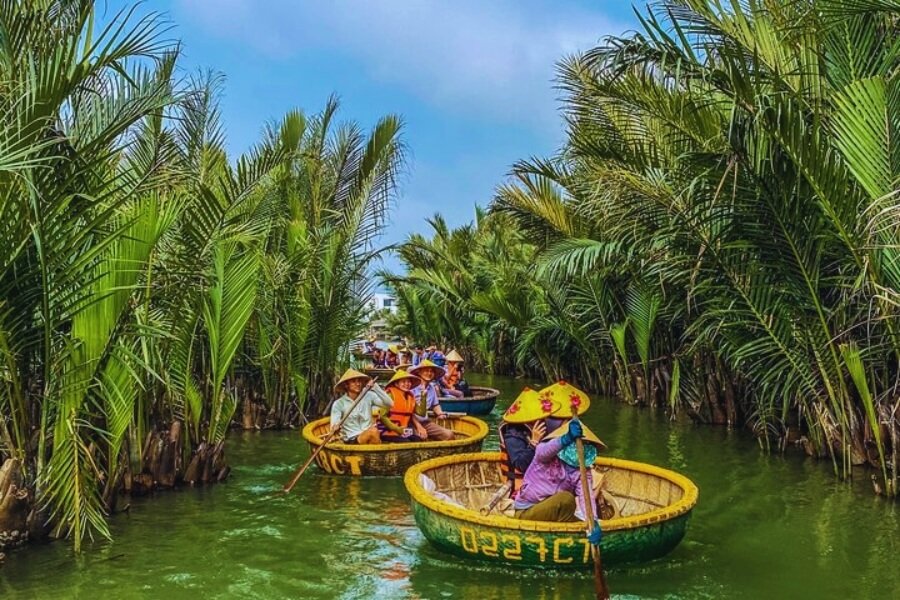
After breakfast, travel to Cam Thanh Coconut Village, where you will board a traditional basket boat and explore peaceful waterways surrounded by nipa palm trees.
Along the journey, learn about the local river-based lifestyle and the importance of these waterways to surrounding communities.
Continue to Tra Que Vegetable Village, a traditional farming community known for the fresh herbs and vegetables used in Hoi An cuisine.
Walk through the gardens, meet local farmers and participate in selected hands-on farming activities.
Next, join a Vietnamese cooking experience using fresh local ingredients. Learn about traditional preparation methods before enjoying the dishes you have prepared for lunch.
After the cooking session, relax with a traditional herbal foot soak.
Later in the afternoon, visit An Bang Beach. Enjoy a leisurely walk along the shore, relax by the sea or simply take a break from sightseeing.
Return to Hoi An, where the evening is free to explore the Ancient Town independently.
Overnight: Hoi An.
Day 10: Travel from Hoi An to Hue via Hai Van Pass
After breakfast, leave Hoi An and travel toward Hue, passing through some of Central Vietnam's most beautiful coastal scenery.
The first stop is the Museum of Cham Sculpture in Da Nang, home to an important collection of artworks and artifacts associated with the ancient Champa civilization.
Continue along Hai Van Pass, a scenic mountain road offering panoramic views of the coastline and surrounding mountains.
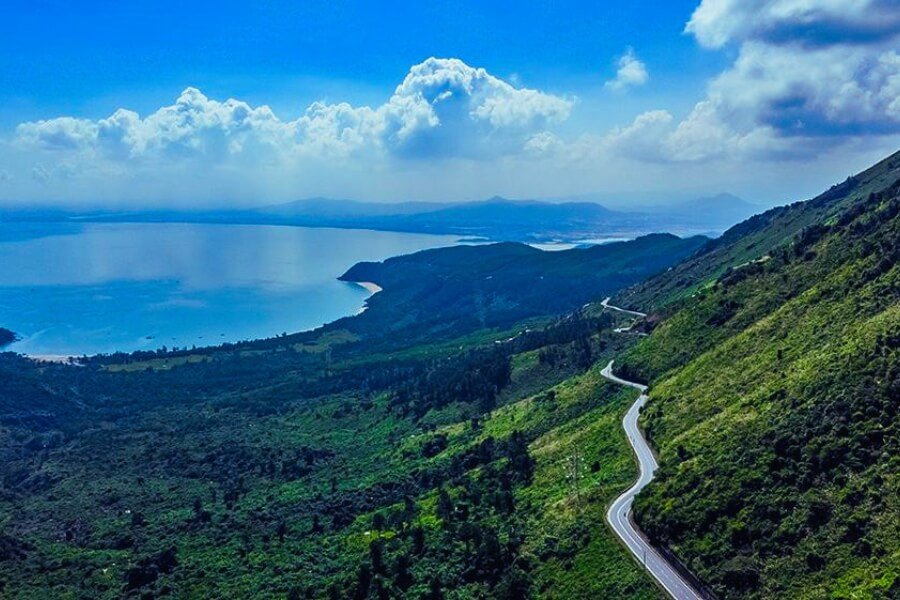
Travel through the Lang Co area before arriving in Hue, Vietnam's former imperial capital.
After lunch at a local restaurant, visit Minh Mang Tomb, a royal mausoleum known for its traditional architecture, landscaped gardens and peaceful surroundings.
Continue to Thien Mu Pagoda, one of Hue's most recognizable Buddhist landmarks overlooking the Perfume River.
After sightseeing, board a traditional boat for a relaxing Perfume River Cruise toward central Hue before transferring to your hotel.
Overnight: Hue.
Day 11: Explore Hue's Imperial Heritage and Traditional Craft Villages
Today is dedicated to discovering the historical and cultural heritage of Hue.
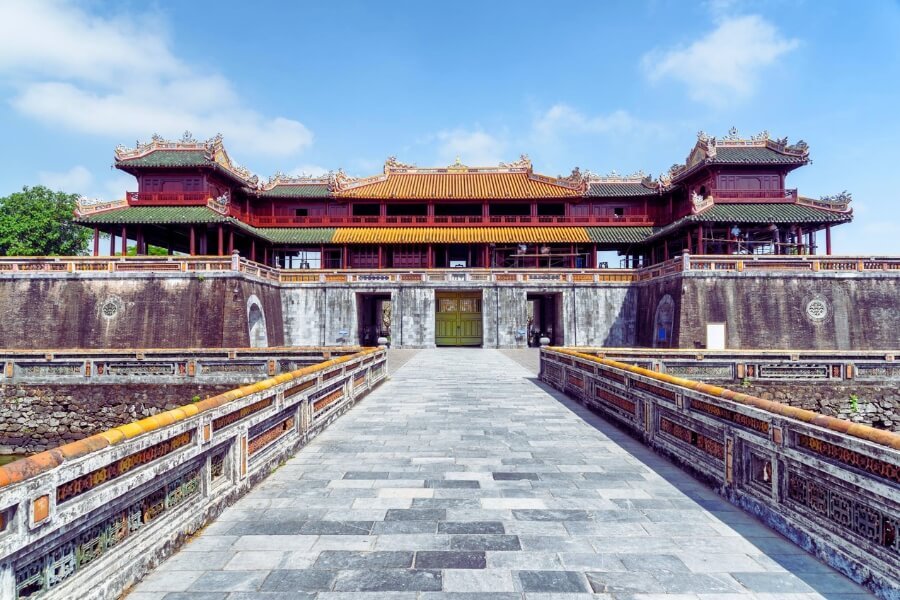
Begin at Hue Imperial City, the former political and ceremonial center of the Nguyen Dynasty.
Walk through its historic gates, courtyards, temples and palace areas while learning about Vietnam's last imperial dynasty.
Continue to Khai Dinh Tomb, one of Hue's most distinctive royal mausoleums. Its architectural design combines Vietnamese decorative traditions with European influences, creating an elaborate and unique complex.
After lunch, visit Thuy Xuan Incense Village, a traditional craft community known for producing colorful incense sticks.
Meet local artisans, learn about the incense-making process and discover the cultural and spiritual importance of incense in Vietnamese daily life.
Return to your hotel, with the remainder of the afternoon and evening free for independent exploration.
Overnight: Hue.
Day 12: Fly to Ho Chi Minh City and Enjoy a Saigon Street Food Tour
After breakfast, transfer to Hue Airport for your domestic flight to Ho Chi Minh City, still widely known by its former name, Saigon.
Upon arrival, meet your driver for a private transfer into the city.
After settling into your hotel, prepare for an evening of Vietnamese food and local culture.
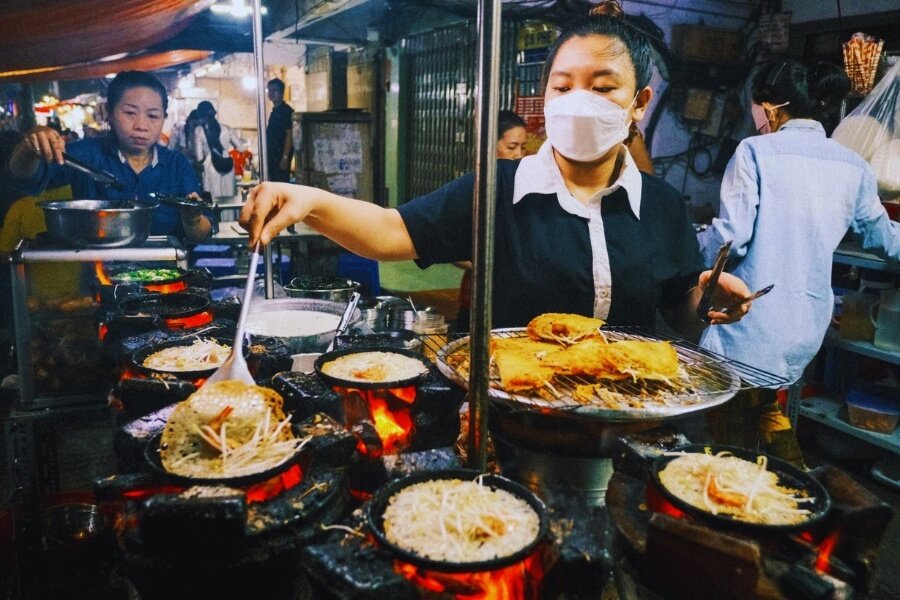
Join a guided Saigon Motorbike Street Food Tour, traveling through lively neighborhoods and experiencing the city from a local perspective.
Along the way, stop at selected food locations to sample different Vietnamese dishes and specialties.
This experience offers a closer look at Ho Chi Minh City's energetic street life, local food culture and vibrant evening atmosphere.
Return to your hotel after the tour.
Overnight: Ho Chi Minh City.
Important: The Hue–Ho Chi Minh City domestic flight is not included in the starting tour price. It must be paid separately and can be arranged upon request.
Days 13–14: Experience the Mekong Delta – Ben Tre and Can Tho
Day 13: Ho Chi Minh City to Ben Tre and Can Tho
After breakfast, leave Ho Chi Minh City and travel to Ben Tre, a destination in the heart of the Mekong Delta.
Upon arrival at Ham Luong Pier, board a local boat and cruise along the Ben Tre River, observing everyday riverside activities and local life.
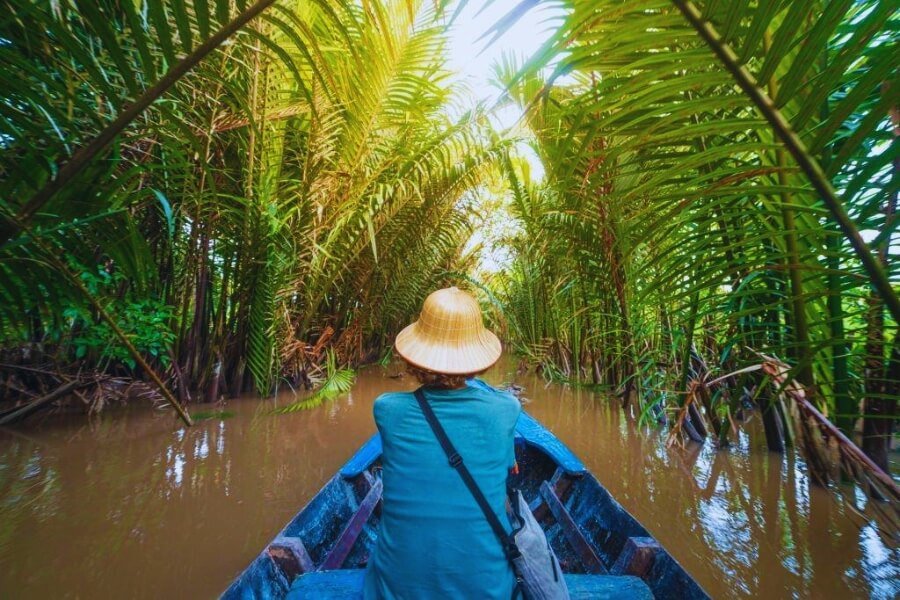
Stop to learn about traditional brick-making before visiting a coconut-processing workshop, where you can see how coconuts are transformed into different local products.
Continue to a family-run sleeping-mat workshop. Meet local residents and learn about this traditional craft while enjoying fresh fruit and tea.
Travel through the countryside by motor cart or bicycle, passing shaded village lanes, gardens and rural settlements.
Enjoy lunch at a local restaurant before boarding a traditional rowing boat for a peaceful journey through a smaller canal.
Later, meet your driver for the transfer to Can Tho, the largest city in the Mekong Delta.
After checking into your hotel, enjoy a free evening.
Overnight: Can Tho.
Day 14: Cai Rang Floating Market and Return to Ho Chi Minh City
Wake up early for one of the Mekong Delta's most memorable experiences: Cai Rang Floating Market.
Board a local boat and travel along the river to observe traders selling fruit, vegetables and other produce directly from their boats.
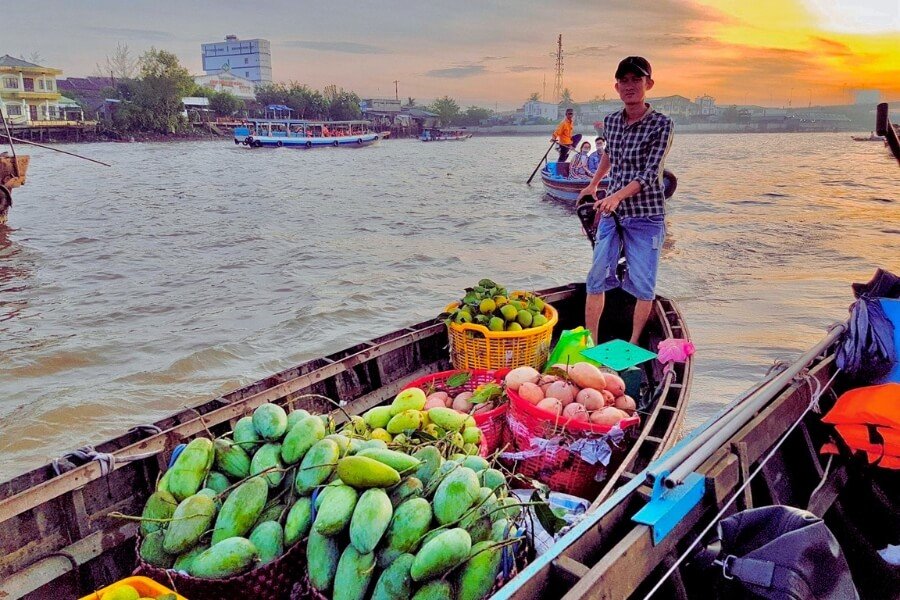
Arriving early provides a better opportunity to experience the market while river activity is at its liveliest.
Continue to a family-run rice noodle workshop, where you can observe traditional production methods and learn about one of the region's familiar food products.
Return to your hotel for breakfast and complete the check-out procedures.
Before leaving Can Tho, visit Binh Thuy Ancient House, a historic residence that offers insight into the cultural and architectural heritage of the Mekong Delta.
After lunch at a local restaurant, begin the drive back to Ho Chi Minh City.
Upon arrival, check into your hotel and enjoy your final evening in Vietnam at leisure.
Overnight: Ho Chi Minh City.
Day 15: Departure from Ho Chi Minh City
Enjoy breakfast at your hotel before checking out.
Depending on your departure schedule, you may have some free time to relax, explore nearby areas or enjoy a final Vietnamese meal.
At the appropriate time, meet your driver for a private transfer to Tan Son Nhat International Airport.
This marks the end of your 15-day journey through Vietnam, from the historic streets of Hanoi to the peaceful waterways of the Mekong Delta.
4. How to Travel Around Vietnam in 15 Days?
Choosing the right transportation is essential when planning a 15-day trip to Vietnam. The country stretches a considerable distance from north to south, so traveling entirely by road between major regions can take a significant amount of time.
For this itinerary, a combination of domestic flights, private road transfers and local transportation offers a practical balance between comfort and sightseeing.
Domestic Flights
Two domestic flight sectors are scheduled during the journey:
- Hanoi to Da Nang on Day 8.
- Hue to Ho Chi Minh City on Day 12.
These flights connect the main regions without requiring lengthy overland journeys.
Keep in mind that both flights are excluded from the tour's starting price and are quoted separately.
Private Road Transfers
Private, air-conditioned road transfers are arranged for the scheduled journeys between destinations, airports and hotels.
This is particularly convenient when traveling between Hanoi, Ha Long Bay, Ninh Binh, Sapa, Hoi An, Hue and the Mekong Delta.
Cruises and Local Boat Experiences
Some of Vietnam's most memorable experiences take place on the water.
During this itinerary, you will enjoy:
- An overnight cruise in Ha Long Bay.
- A traditional sampan journey in Trang An.
- A basket boat experience in Cam Thanh.
- A Perfume River cruise in Hue.
- Traditional boat journeys in Ben Tre and Can Tho.
Each experience offers a different perspective on Vietnam's natural landscapes and local lifestyles.
Transportation Within Cities
In major cities, walking, taxis and ride-hailing services are convenient options for independent exploration.
For longer journeys, it is advisable to arrange transportation in advance, especially when traveling between regions or connecting with domestic flights.
5. How Much Does a 15-Day Trip to Vietnam Cost?
The cost of a 15-day trip to Vietnam depends on your accommodation preferences, travel season, transportation choices, dining habits and the activities included in your itinerary.
For travelers looking for a convenient way to explore multiple destinations, a private tour package can simplify accommodation, transportation and sightseeing arrangements.
Vietnam 15-Day Tour Package Price
Auasia Travel currently offers its 15-Day Vietnam Tour from USD 1,258 per person.
The package includes:
- Handpicked accommodation in comfortable double or twin rooms with daily breakfast.
- One overnight Ha Long Bay cruise in a private cabin.
- Private, air-conditioned road transfers and sightseeing transportation as specified in the itinerary.
- Experienced local English-speaking guides for scheduled sightseeing.
- Selected meals according to the daily itinerary.
- Hanoi Jeep Tour, depending on arrival time.
- Traditional Trang An sampan journey in Ninh Binh.
- Fansipan Cable Car and scheduled sightseeing.
- Traditional Perfume River cruise in Hue.
- Cam Thanh basket boat and Tra Que farming and cooking experiences.
- Saigon Motorbike Street Food Tour with food tastings.
- Ben Tre and Can Tho Mekong Delta experiences.
- Bottled water and cool towels during excursions.
- Entrance fees for scheduled sightseeing visits.
- Applicable service charges.
Additional Costs to Consider
It is important to understand what is not included in the starting tour price.
Expense | Included? |
Accommodation | Yes |
Daily breakfast | Yes |
Selected meals | Yes |
Scheduled sightseeing and entrance fees | Yes |
Private road transfers specified in the itinerary | Yes |
Hanoi – Da Nang domestic flight | No |
Hue – Ho Chi Minh City domestic flight | No |
International airfares | No |
Vietnam visa, where required | No |
Travel insurance | No |
Personal expenses | No |
Meals and drinks not specified in the itinerary | No |
Optional activities | No |
Tips for guides and drivers | No |
The two domestic flights are quoted separately and can be arranged by Auasia Travel upon request without booking fees.
The suggested tipping budget for guides and drivers is USD 3–5 per person per day. Tips are not included in the tour price.
Therefore, when comparing Vietnam tour packages, always check whether domestic flights, accommodation, entrance fees and scheduled activities are included.
6. Best Time to Visit Vietnam for 15 Days
Vietnam has different weather patterns across its northern, central and southern regions. This means there is no single perfect month for every destination on a north-to-south itinerary.
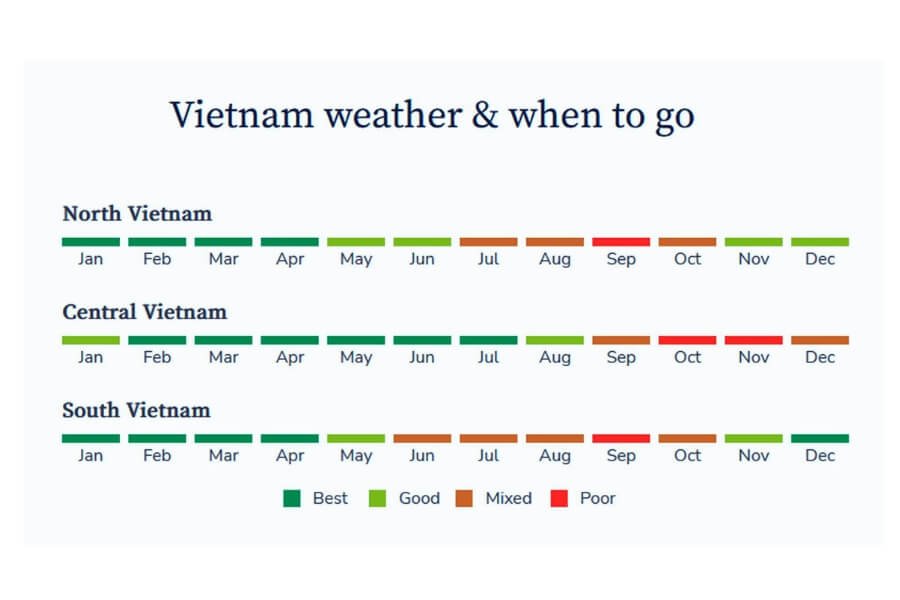
Understanding these regional differences will help you choose a suitable travel period.
Northern Vietnam: Hanoi, Ha Long Bay and Sapa
Northern Vietnam experiences four distinct seasons.
- December to February: Generally cool to cold, with misty conditions. Sapa can be particularly chilly.
- March to April: Often mild and pleasant, with favorable conditions for sightseeing.
- May to August: Hot, humid and rainy, with possible storms.
- September to November: Generally cooler, with many comfortable days for outdoor activities.
For Ha Long Bay, spring and autumn can be attractive periods for overnight cruises, although weather conditions may still affect schedules.
Sapa is particularly beautiful during seasonal changes, when its mountain scenery and rice terraces offer different landscapes throughout the year.
Central Vietnam: Hoi An, Da Nang and Hue
Central Vietnam has a different seasonal pattern from the north.
- February to August: Generally warmer and sunnier, with favorable conditions for sightseeing and coastal activities.
- September to January: Rainier conditions become more common, with possible storms and flooding, particularly around Hoi An and Hue.
If exploring ancient towns, coastal landscapes and outdoor attractions is a priority, February to August is generally a more favorable period.
Southern Vietnam: Ho Chi Minh City and the Mekong Delta
Southern Vietnam has two main seasons.
- December to April: Generally hot, sunny and relatively dry.
- May to November: Rainy season, with high humidity and regular showers, often in the afternoon.
The rainy season does not necessarily prevent sightseeing. Many activities can still take place, although schedules may need to adapt to weather conditions.
When Should You Plan Your 15-Day Vietnam Trip?
March to April is often a practical compromise for travelers visiting multiple regions, although temperatures can become hot and local weather conditions vary.
October and November can be excellent for Northern Vietnam, but travelers should pay attention to the rainy season in Central Vietnam.
For the most suitable travel dates, check regional weather conditions before confirming your departure.
7. Practical Travel Tips for First-Time Visitors
A little preparation can make a significant difference to your Vietnam experience.
Visa and Entry Requirements
Visa requirements depend on your nationality, travel purpose and length of stay.
Some nationalities qualify for visa exemptions, while others may need to apply for an electronic visa before traveling.
Your passport should also meet Vietnam's entry validity requirements. The tour operator currently recommends a passport valid for at least six months beyond the date of entry.
What to Pack for a 15-Day Trip
Because this itinerary covers mountains, cities, coastal areas and river destinations, packing for different weather conditions is important.
Recommended items include:
- Lightweight and breathable clothing for warm weather.
- Comfortable walking shoes for sightseeing and village visits.
- A warmer jacket for Sapa and Fansipan, particularly during colder months.
- A lightweight rain jacket or compact umbrella.
- Sunscreen, sunglasses and a hat.
- Swimwear and quick-dry clothing.
- Personal medication and essential toiletries.
- A small daypack for daily excursions.
Try to keep your luggage manageable, especially when taking domestic flights.
Money, Currency and Payments
Vietnam's official currency is the Vietnamese dong (VND).
Credit and debit cards are accepted at many hotels, larger restaurants and established businesses. However, cash remains useful for smaller purchases, local markets and some countryside establishments.
It is advisable to carry a reasonable amount of local currency while keeping larger amounts and important documents secure.
Respect Local Customs and Traditions
Vietnam is a culturally diverse country with strong traditions and religious heritage.
When visiting temples, pagodas and other religious sites, dress respectfully by covering your shoulders and knees.
Remove your shoes before entering certain sacred or private spaces when requested.
A friendly greeting and a few basic Vietnamese phrases can also help create positive interactions with local communities.
Prepare for Different Activity Levels
Not all sightseeing activities require the same amount of physical effort.
For example:
- Mua Cave involves climbing a steep stone staircase.
- Cat Cat Village includes slopes, steps and uneven paths.
- The final approach to Fansipan Summit involves walking and climbing steps at high altitude.
- Boat trips and village experiences may involve getting on and off small boats.
If you have mobility concerns or prefer a more relaxed travel pace, discuss possible adjustments before confirming your itinerary.
Stay Connected and Travel Safely
Consider arranging a local SIM card or eSIM for navigation, communication and accessing travel information.
For independent city transportation, use registered taxis or reputable ride-hailing applications.
Keep personal belongings secure in crowded areas and follow your guide's instructions during scheduled activities.
Travel insurance is also recommended, particularly for a multi-region journey involving several transportation connections.
8. Common Mistakes to Avoid When Traveling in Vietnam
Even with 15 days available, poor planning can make a Vietnam trip unnecessarily tiring.
Here are five common mistakes to avoid.
1. Trying to Visit Too Many Destinations
Vietnam has many beautiful places, but adding too many destinations can leave little time to enjoy them. Prioritize the regions and experiences that interest you most.
2. Underestimating Travel Time
Distances between major destinations can be significant. Always consider airport transfers, check-in procedures and road travel when planning your schedule.
3. Forgetting to Budget for Domestic Flights
Some Vietnam tour packages do not include domestic airfare. Check whether flights between regions are included before comparing package prices.
4. Ignoring Regional Weather Differences
A sunny day in Ho Chi Minh City does not necessarily mean the same weather in Sapa or Hue. Check the climate of each region before packing.
5. Planning Every Hour of the Trip
A good itinerary should include opportunities to relax and explore independently. Allowing some free time can make a 15-day journey more enjoyable.
9. Frequently Asked Questions About a 15-Day Trip to Vietnam
Is 15 Days Enough to Explore Vietnam?
Yes. Fifteen days is enough to experience many of Vietnam's major highlights across the north, central region and south. You can explore Hanoi, Ha Long Bay, Ninh Binh, Sapa, Hoi An, Hue, Ho Chi Minh City and the Mekong Delta within a well-organized itinerary.
However, it is not enough to discover every destination in the country, so choosing a practical route is important.
How Much Money Do I Need for 15 Days in Vietnam?
Your total budget depends on your travel style, accommodation, meals, transportation and activities.
Auasia Travel lists its 15-day tour from USD 1,258 per person. However, this price does not include the two domestic flights from Hanoi to Da Nang and Hue to Ho Chi Minh City, international airfare, visa fees where applicable, travel insurance and personal expenses.
You should calculate these additional costs before confirming your travel budget.
Should I Travel from North to South or South to North Vietnam?
Both directions offer excellent travel experiences.
Traveling from north to south allows you to begin in Hanoi, explore the mountains and limestone landscapes of Northern Vietnam, continue through Central Vietnam and finish in Ho Chi Minh City and the Mekong Delta.
Traveling in the opposite direction is also possible, depending on your international flight arrangements and preferred destinations.
Are Domestic Flights Included in the USD 1,258 Vietnam Tour Package?
No. The two domestic flights scheduled in this itinerary are not included in the starting tour price.
These are:
- Hanoi to Da Nang on Day 8.
- Hue to Ho Chi Minh City on Day 12.
Auasia Travel can arrange these flights upon request at an additional cost.
What Is the Best Time to Visit Vietnam for 15 Days?
March to April is generally a practical period for exploring multiple regions, although weather conditions vary between Northern, Central and Southern Vietnam.
If you plan to visit during another season, check regional weather patterns, especially the rainy season in Central Vietnam.
Can I Visit Hanoi, Sapa, Ha Long Bay, Hoi An and the Mekong Delta in One Trip?
Yes. These destinations can be combined in a 15-day journey with a carefully planned transportation schedule.
Domestic flights between regions and private road transfers help connect the main destinations while leaving time for sightseeing and local experiences.
Is This 15-Day Vietnam Itinerary Suitable for First-Time Visitors?
Yes. This route introduces first-time visitors to several important aspects of Vietnam, including history, culture, natural landscapes, traditional villages, local cuisine and everyday life.
It combines guided sightseeing with free time, making it suitable for travelers who want to explore the country without organizing every transportation and sightseeing arrangement independently.
10. Explore Vietnam with Auasia Travel
Discover the best of Vietnam in 15 days, from Hanoi's historic streets and Ha Long Bay's spectacular limestone islands to the mountain scenery of Sapa, the cultural heritage of Hue and the peaceful waterways of the Mekong Delta.
This itinerary combines iconic destinations with meaningful local experiences, including an overnight cruise, a Fansipan Cable Car journey, Hoi An countryside activities, a Saigon street food tour and traditional Mekong Delta workshops.
If you prefer a well-organized journey with accommodation, scheduled sightseeing, local guides and private transfers arranged in advance, explore our Vietnam tour package.
15-Day Vietnam Tour: Hanoi, Ha Long Bay, Sapa, Fansipan, Hoi An & Mekong Delta
- 15 days and 14 nights.
- Starting in Hanoi and ending in Ho Chi Minh City.
- Accommodation and scheduled sightseeing included.
- Private road transfers and local experiences.
- Customizable arrangements to suit your travel preferences.
Starting from USD 1,258 per person.
Please note that the two domestic flights and international airfares are not included in the starting tour price.
Contact Auasia Travel to discuss your preferred travel dates, request a detailed quotation and customize your Vietnam journey.
Tags:
Read this next

Vietnam Solo Travel Guide 2025: Essential Tips For First-Time Travelers



Quick Contact
WHAT TRAVELERS SAY ABOUT AUASIA TRAVEL
See Real Experiences from Our Travelers


