
Vietnam 15-Day Trip Cost: A Complete Budget Breakdown For Travelers
Content []
So, how much should you prepare for 15 days in Vietnam?
As a general planning estimate, travelers sharing accommodation can expect to spend approximately:
- Budget travel: USD 550–1,050 per person.
- Mid-range travel: USD 850–1,600 per person.
- Comfortable travel: USD 1,600–3,100 per person.
- Luxury travel: USD 3,000–6,500+ per person.
These are indicative estimates for a 15-day holiday with 14 nights, including 13 hotel nights and one overnight cruise in Ha Long Bay. They cover accommodation, meals, ground transportation and regular sightseeing.
Important: The estimates exclude international airfares, domestic flights, visa fees where applicable, travel insurance, tips, personal shopping and optional premium services. Domestic flights should be calculated separately according to your travel dates and selected airlines.
This guide examines the main expenses involved in a Vietnam holiday, helping you compare travel styles, estimate daily spending and decide whether independent travel or a private tour offers better value.
If you are still deciding how to organize your holiday, explore our 15-day Vietnam itinerary guide for a broader overview. This article focuses specifically on the budget and expenses you should prepare.
Table of Contents
- 1. How Much Does a 15-Day Trip to Vietnam Cost?
- 2. Vietnam Daily Travel Budget by Travel Style
- 3. Vietnam Travel Expenses: Detailed Cost Breakdown
- 4. Independent Travel vs. Private Vietnam Tour
- 5. Example Budget for a 15-Day Vietnam Trip
- 6. How to Compare 15-Day Vietnam Tour Packages
- 7. Is Vietnam Expensive to Visit?
- 8. Frequently Asked Questions About Vietnam Travel Costs
1. How Much Does a 15-Day Trip to Vietnam Cost?
The cost of a 15-day trip to Vietnam varies depending on your accommodation standards, dining preferences, transportation choices and sightseeing activities.
A backpacker staying in hostels and using affordable local transportation will spend considerably less than a traveler choosing four-star hotels, private vehicles and premium cruises.
The following table provides an indicative budget for different travel styles.
Travel Style | Estimated Budget per Person | Typical Experience |
Budget | USD 550–1,050 | Hostels, local food, buses and affordable activities |
Mid-range | USD 850–1,600 | Private hotel rooms, local restaurants and standard sightseeing |
Comfortable | USD 1,600–3,100 | Better hotels, convenient transfers and quality experiences |
Luxury | USD 3,000–6,500+ | Five-star accommodation, premium cruises and personalized services |
These estimates assume two travelers sharing a double or twin room where applicable. Solo travelers booking private accommodation should allow for additional room costs.
What Is Included in These Estimates?
For a consistent comparison, the estimates are based on the following general assumptions:
- 15 days and 14 nights in Vietnam.
- Approximately 13 nights in hotels or equivalent accommodation.
- One overnight Ha Long Bay cruise.
- Meals throughout the holiday.
- Local and intercity ground transportation.
- Regular sightseeing and selected entrance tickets.
The estimates do not include:
- International flights to and from Vietnam.
- Domestic flight tickets.
- Visa fees, where applicable.
- Travel insurance.
- Tips, shopping and personal expenses.
- Optional premium activities or accommodation upgrades.
The overnight cruise replaces one regular hotel night and includes selected onboard meals, so its cost should not be counted again as a separate hotel stay and full day of dining.
Actual prices may change according to travel dates, room availability, seasonal demand and service standards.
For couples, sharing accommodation can reduce the cost per person. However, solo travelers may face single-room supplements or additional charges when booking private services.
2. Vietnam Daily Travel Budget by Travel Style
Understanding your daily spending is useful when deciding how much money to prepare before departure.
The following estimates represent routine travel days, including accommodation, meals, local transportation and ordinary sightseeing. They exclude long-distance intercity transportation, domestic flights and the additional cost of an overnight cruise.
Travel Style | Estimated Daily Budget per Person |
Budget Travel | USD 25–50 |
Mid-Range Travel | USD 45–80 |
Comfortable Travel | USD 90–160 |
Luxury Travel | USD 180–350+ |
Budget Travel
Estimated daily budget: USD 25–50 per person
Vietnam offers plenty of affordable options for travelers who want to control their spending.
A typical budget traveler may choose:
- Hostel dormitories or basic guesthouses.
- Street food stalls and local restaurants.
- Public buses and affordable local transportation.
- Free attractions, markets and walking activities.
- A limited number of paid experiences.
A street food meal with iced tea is listed at approximately VND 45,000, or around USD 1.70, in Vietnam's official tourism price guide.
Travelers who eat mainly local food and choose inexpensive accommodation can keep their daily expenses relatively low.
However, this travel style requires flexibility. Private transfers, upgraded accommodation and premium cruises can increase the overall budget significantly.
Mid-Range Travel
Estimated daily budget: USD 45–80 per person
Mid-range travel offers a practical balance between affordability and comfort.
This category is suitable for travelers who prefer private hotel rooms, convenient transportation and a mixture of local and international dining.
Typical expenses include:
- Three-star hotels or comfortable boutique properties.
- Private rooms with breakfast.
- Street food and casual restaurant meals.
- Grab rides, taxis and selected transfers.
- Guided sightseeing and paid cultural activities.
Sharing a double or twin room can make this travel style particularly attractive for couples.
Travelers can enjoy comfortable accommodation and organized experiences without necessarily choosing luxury services.
Comfortable Travel
Estimated daily budget: USD 90–160 per person
Comfortable travel is ideal for visitors who value convenience and prefer to spend less time organizing individual services.
This category may include:
- Four-star hotels and quality boutique accommodation.
- Private air-conditioned transportation.
- English-speaking local guides.
- Comfortable restaurants and selected fine-dining experiences.
- Well-organized sightseeing activities.
- Higher-quality overnight cruises.
The cost depends considerably on the number of travelers.
For example, a private vehicle shared by four passengers may offer better value per person than the same vehicle arranged for one traveler.
Luxury Travel
Estimated daily budget: USD 180–350+ per person
Luxury travel offers a more personalized holiday with premium accommodation, private services and high-end experiences.
Typical expenses include:
- Five-star hotels and luxury resorts.
- Premium overnight cruises.
- Private drivers and dedicated guides.
- Fine dining and international cuisine.
- Personalized excursions and exclusive activities.
Some travelers may also choose upgraded cruise cabins, private boat arrangements or premium transportation.
At this level, the overall budget depends heavily on individual preferences and the quality of services selected.
3. Vietnam Travel Expenses: Detailed Cost Breakdown
Understanding individual expenses is essential when preparing a realistic Vietnam travel budget.
The following sections examine the main cost categories and provide indicative price references based on published information available in 2026.
Accommodation Costs in Vietnam
Accommodation is one of the most important components of a travel budget.
Vietnam offers a wide range of options, from affordable hostel dormitories to internationally recognized five-star hotels.
The following table provides general market reference ranges.
Accommodation Type | Estimated Price per Night |
Hostel dormitory | USD 7–18 per bed |
Budget private guesthouse | USD 20–40 per room |
Three-star hotel | USD 35–70 per room |
Four-star or quality boutique hotel | USD 60–150 per room |
Five-star hotel or luxury resort | USD 150–400+ per room |
These are indicative market ranges, not fixed national rates.
Vietnam's official tourism website also provides general reference prices, including approximately USD 11.50 for a budget hostel, USD 26.85 for a mid-range hotel and USD 134.35 for a luxury hotel per night. Actual prices depend on location, season and property standards.
For couples, sharing a double or twin room generally reduces the accommodation cost per person.
When comparing hotels, pay attention to:
- Room category and occupancy.
- Breakfast inclusions.
- Taxes and service charges.
- Location and transportation access.
- Cancellation conditions.
- Peak-season surcharges.
Money-saving tip: Compare the final booking price rather than the advertised nightly rate. Booking early can also help secure better options during major holidays and busy travel periods.
Food and Dining Costs in Vietnam
Vietnamese cuisine offers options for almost every budget, from inexpensive street food to upscale restaurants.
Typical reference prices include:
Food Category | Estimated Cost |
Street food meal with iced tea | Around USD 1.70 |
Local casual meal | USD 3–8 |
Cappuccino in a café | Around USD 2.10 |
Three-course restaurant meal | Around USD 17.25 per person |
Fine dining | USD 30–60+ per person |
The official Vietnam Tourism price guide provides the first three reference prices and the three-course restaurant example. Actual restaurant prices vary by location and service level.
For practical daily planning, consider:
Dining Style | Estimated Daily Food Budget |
Mostly street food | USD 6–10 |
Street food and casual restaurants | USD 14–24 |
Comfortable and upscale dining | USD 35–100+ |
These are planning allowances rather than fixed meal prices. Alcohol, premium drinks and special dining experiences can increase expenses.
Coffee, bottled water, fresh juices and snacks may seem inexpensive individually, but they can become noticeable costs over 15 days.
Money-saving tip: Mix local restaurants with occasional upscale dining. This allows you to experience Vietnamese cuisine while keeping your overall food budget under control.
Domestic Flight Costs
Domestic flights can be an important expense when traveling between regions within a limited period.
Air travel can save considerable time compared with long-distance road or rail journeys.
However, there is no single reliable nationwide airfare for every domestic route. Ticket prices depend on:
- Departure and arrival airports.
- Airline and fare class.
- Booking date and travel season.
- Checked baggage allowance.
- Seat selection and additional services.
- Flight availability.
For accurate budgeting, search for the actual flight dates and compare the final prices, including baggage and service fees.
If your tour package includes domestic flights, confirm whether the advertised price covers the tickets themselves or only airport transfers.
For Auasia Travel's 15-day tour t571, the two domestic flight sectors are Hanoi–Da Nang and Hue–Ho Chi Minh City. Both are quoted separately from the starting tour price.
Private Transfers and Local Transportation Costs
Transportation expenses depend on the distance traveled, vehicle type, number of passengers and level of convenience.
Common options include:
Transportation | Cost Consideration |
Grab or local taxi | Depends on distance, traffic and vehicle type |
Airport transfer | Depends on airport, destination and vehicle |
Intercity bus | Depends on route and seat category |
Sleeper train | Depends on route, berth and departure date |
Private car | Depends on distance, vehicle size and service arrangements |
Vietnam's official tourism website provides an indicative inner-city taxi reference of approximately VND 35,000–100,000, or USD 1.35–3.85.
Train fares also vary by route and class. For example, published 2026 ticket references for Hanoi–Hue show different starting prices for soft seats and sleeper berths. The Da Nang–Hue journey is considerably shorter and has different fare levels.
Before purchasing tickets, compare:
- Travel duration.
- Departure and arrival locations.
- Luggage allowance.
- Seat or berth category.
- Booking and service fees.
Private car transfers are generally quoted according to the route, vehicle type and passenger numbers.
When comparing quotations, check whether fuel, road tolls, parking fees, driver accommodation and waiting time are included.
For couples, families and small groups, sharing a private vehicle may provide better convenience and value than arranging several separate transfers.
Sightseeing and Entrance Fees
Sightseeing expenses depend on the number of attractions visited and whether you book additional guided experiences.
Some cultural attractions have relatively affordable entrance fees, while specialized activities and premium experiences require a larger budget.
For reference, published entrance fees include:
Attraction | Adult Ticket Price |
Hoi An Ancient Town | VND 80,000 or 120,000 |
Hue Imperial City | VND 200,000 |
Selected Hue royal tombs | From VND 150,000 |
Hoi An's official heritage authority explains that the two ticket categories provide different combinations of access to monuments and cultural attractions.
For more information about the town's heritage attractions and local experiences, explore our Hoi An travel guide.
Hue's official city portal lists the Imperial City adult ticket at VND 200,000 and several royal tomb tickets from VND 150,000.
You can also explore our Hue travel guide for more information about the Imperial City, royal tombs and other local experiences.
Travelers should also consider additional expenses for:
- Cable car experiences.
- Boat trips.
- Local workshops.
- Cooking classes.
- Cultural performances.
- Optional guided activities.
If you book a tour, check whether scheduled entrance tickets and activities are already included. Paying separately for services already covered by a package can lead to unnecessary expenses.
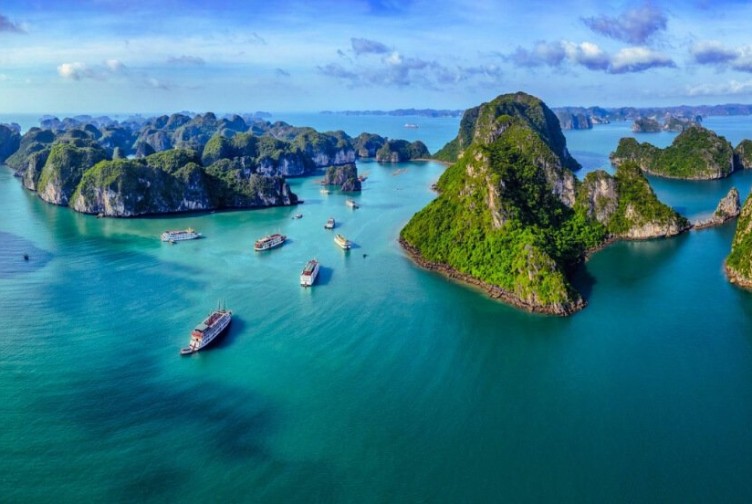
Ha Long Bay Overnight Cruise Costs
An overnight cruise is one of the major experience-related expenses for travelers visiting northern Vietnam.
Prices depend on the cruise operator, cabin category, travel season, route and onboard services.
As a market reference, Ava Travel's published 2026 cruise listings show prices ranging from approximately USD 102 to USD 430 per person for a two-day, one-night cruise, based on two guests sharing a cabin. Its published median is approximately USD 165 per person.
This is one provider's published price sample, not a fixed rate for the entire cruise market.
Typical cruise services may include:
- Private cabin accommodation.
- Selected meals onboard.
- Scheduled sightseeing activities.
- Kayaking or traditional bamboo boat experiences, depending on the cruise.
- Onboard facilities and entertainment.
Some services may require additional payment, including alcoholic beverages, premium drinks, spa treatments, optional activities and tips.
When comparing cruise prices, check the cabin category, route, meals and actual inclusions rather than choosing an operator based only on the lowest advertised rate.
To compare different cruise categories, cabin options and available experiences, browse our Ha Long Bay cruise collection and find an option that matches your travel budget.
Other Expenses to Consider
Several smaller expenses should also be included in your travel budget.
Expense | Budget Consideration |
Vietnam visa | Depends on nationality and visa eligibility |
Travel insurance | Depends on coverage and trip duration |
SIM or eSIM | Depends on data package |
Laundry | Depends on hotel and service provider |
Tips | Optional and dependent on service |
Drinks and snacks | Depends on individual habits |
Shopping and souvenirs | Personal spending |
Emergency reserve | Recommended for unexpected expenses |
For eligible travelers who need an electronic visa, the official government fee is:
- USD 25 for a single-entry e-visa.
- USD 50 for a multiple-entry e-visa.
Some nationalities may qualify for visa exemption. Always check the current rules applicable to your passport through the official Vietnamese immigration portal before budgeting.
A small emergency reserve is also useful, particularly when your journey involves multiple transportation connections.
4. Independent Travel vs. Private Vietnam Tour
One of the most important decisions when planning a Vietnam holiday is whether to organize everything independently or book a private tour.
Both options have advantages, and the most suitable choice depends on your budget, travel preferences and available planning time.
The Cost of Traveling Independently
Independent travel allows visitors to control individual expenses and select services according to their preferences.
You can book accommodation directly, choose restaurants, purchase transportation tickets and decide which activities are worth paying for.
Advantages:
- Greater flexibility over daily spending.
- Freedom to change travel plans.
- Ability to select accommodation independently.
- Opportunities to use affordable local transportation.
- More control over dining and optional activities.
Potential disadvantages:
- More time spent researching and booking services.
- Responsibility for coordinating transportation.
- Need to manage flight connections and hotel check-ins.
- Separate payments for many activities and services.
- Greater responsibility when unexpected changes occur.
Independent travel can be economical, but it requires careful preparation, particularly when coordinating several suppliers.
The Cost of Booking a Private Vietnam Tour
A private tour combines several travel services into one organized arrangement.
Depending on the package, the price may include accommodation, selected meals, transportation, local guides, entrance fees and scheduled activities.
This arrangement can be convenient for travelers who prefer a coordinated holiday without having to organize every individual service.
Advantages:
- Transportation and sightseeing arrangements are coordinated in advance.
- Less time spent researching individual suppliers.
- Private road transfers provide greater convenience.
- Local guides offer assistance and destination knowledge.
- Several services can be managed through one travel provider.
Potential disadvantages:
- Less flexibility than arranging every activity independently.
- Package prices depend on service standards and group size.
- Optional activities may require additional payment.
- Some packages exclude domestic or international airfares.
A private tour should not automatically be considered more expensive than independent travel. Its value depends on the included services and the equivalent costs of arranging them separately.
Which Option Offers Better Value?
The right choice depends on your priorities.
Consideration | Independent Travel | Private Tour |
Budget control | High | Depends on package |
Flexibility | Very high | Based on itinerary |
Planning effort | High | Lower |
Transportation arrangements | Self-managed | Coordinated |
Local guide support | Usually additional | Often included |
Convenience | Depends on preparation | Generally higher |
Suitable for | Flexible travelers | Couples, families and small groups |
If you enjoy researching destinations and arranging your own services, independent travel may be the better option.
However, if you want to reduce planning time and have accommodation, transportation and scheduled sightseeing coordinated in advance, a private tour may offer better overall convenience.
The best way to compare the two options is to calculate the total cost of equivalent services rather than comparing a tour's starting price with only part of an independent travel budget.
5. Example Budget for a 15-Day Vietnam Trip
A useful way to understand your travel expenses is to compare the estimated costs for a solo traveler and two people traveling together.
The following estimates are illustrative planning ranges for a 15-day holiday with 14 nights, including one overnight cruise.
They assume:
- Accommodation appropriate to the selected travel style.
- Meals throughout the holiday.
- Ground transportation and regular sightseeing.
- One overnight cruise in Ha Long Bay.
They exclude international airfares, domestic flights, applicable visa fees, travel insurance, tips and personal shopping.
Estimated Budget for a Solo Traveler
Solo travelers often spend more per person on accommodation because they cannot divide the cost of a private room with another guest.
If you are planning to explore Vietnam on your own, our Vietnam Solo Travel Guide for First-Time Travelers offers additional advice on accommodation, transportation and practical travel preparation.
The budget category assumes hostel accommodation, while higher categories assume private rooms.
Travel Style | Estimated Total per Person |
Budget | USD 600–1,150 |
Mid-range | USD 1,050–1,950 |
Comfortable | USD 2,200–3,800 |
Luxury | USD 4,000–8,500+ |
For budget travelers, staying in dormitories and using affordable transportation can help reduce expenses.
Travelers who prefer private rooms, convenient transfers and more organized activities should prepare a higher budget.
Private tours may also apply a single supplement when only one person occupies a room or private vehicle.
Estimated Budget for Two Travelers
Traveling as a couple can provide better value because accommodation and some transportation expenses can be shared.
The following figures represent the estimated total for two people sharing a double or twin room.
Travel Style | Estimated Total for Two |
Budget | USD 1,100–2,100 |
Mid-range | USD 1,700–3,200 |
Comfortable | USD 3,200–6,200 |
Luxury | USD 6,000–13,000+ |
The total is not simply twice the cost of one solo traveler because couples can share certain expenses, particularly accommodation and private transportation.
However, premium accommodation, private vehicles and luxury experiences can still represent significant costs.
Additional Expenses to Prepare For
Regardless of whether you travel alone or with a partner, some costs should be calculated separately.
International Airfares
Long-haul flights to Vietnam can represent a substantial part of your total holiday budget. Prices depend on departure country, airline, booking period and travel season.
Domestic Flights
If your journey requires domestic flights, check the actual fares for your travel dates. Include baggage fees, seat selection and other additional charges.
Visa Fees
Visa requirements vary according to nationality and passport eligibility.
Travel Insurance
Choose coverage appropriate for your travel duration and planned activities.
Personal Spending
Shopping, souvenirs, drinks, laundry and optional experiences should be considered separately.
Emergency Reserve
Keeping additional funds available can help cover unexpected transportation changes, medical expenses or other travel disruptions.
A realistic budget should account for these expenses rather than allocating every dollar to accommodation and sightseeing.
6. How to Compare 15-Day Vietnam Tour Packages
When comparing tour packages, the lowest advertised price does not necessarily represent the best value.
Two tours with similar durations may offer very different accommodation standards, transportation arrangements, meal inclusions and sightseeing services.
Before booking, carefully review the following details.
You can browse our Vietnam package tours to compare different trip durations, destinations and service arrangements before choosing a package that suits your budget.
Check What Is Included in the Tour Price
Start by examining the services covered by the advertised package price.
Important items include:
- Accommodation and room standards.
- Daily breakfast.
- Selected lunches and dinners.
- Overnight cruise accommodation.
- Private transportation.
- Airport transfers.
- English-speaking tour guides.
- Scheduled sightseeing activities.
- Entrance fees.
- Local experiences.
A package that includes more scheduled services may offer greater convenience than a cheaper alternative requiring numerous additional payments.
Understand Excluded Expenses
Always review the exclusions before making a reservation.
Common additional expenses include:
- International airfares.
- Domestic flights.
- Visa fees.
- Travel insurance.
- Meals and drinks not specified in the itinerary.
- Personal expenses.
- Optional activities.
- Tips for guides and drivers.
Domestic flights deserve particular attention because a package may include airport transfers without including the actual airfare.
Ask the tour operator for a complete quotation showing both included and excluded services.
Compare Tour Prices Based on Actual Value
When comparing two private Vietnam tours, consider the following:
Comparison Criteria | What to Check |
Accommodation | Hotel category, location and room type |
Transportation | Private vehicle, shared transfers or public transport |
Flights | Included or quoted separately |
Meals | Breakfast, lunch and dinner inclusions |
Cruise | Cabin category and onboard services |
Guides | Private guide or shared guide |
Activities | Scheduled experiences and entrance tickets |
Group size | Private arrangement or group tour |
Flexibility | Possibility of adjusting services |
The final decision should reflect the complete service package, not just the initial advertised price.
For example, a private tour starting at USD 1,258 may initially appear more expensive than an independent travel estimate. However, the comparison should account for accommodation, selected meals, private road transportation, guides, scheduled sightseeing and cruise services included in the package.
Always add separately quoted flights and other excluded expenses before comparing the final amounts.
7. Is Vietnam Expensive to Visit?
Vietnam is generally considered an affordable destination compared with many international travel markets.
However, affordability does not mean every travel experience is inexpensive.
A traveler staying in hostels and eating street food will have a very different budget from someone choosing four-star hotels, private drivers and premium overnight cruises.
One of Vietnam's advantages is the availability of different service levels, allowing visitors to select experiences according to their financial priorities.
The country's official tourism website provides examples of local prices, including street food, coffee, accommodation and transportation. These references illustrate why visitors can enjoy different travel styles without necessarily paying luxury prices.
How to Manage Your Vietnam Travel Budget
A few practical decisions can help you manage expenses more effectively.
- Choose Accommodation According to Your Priorities
You do not necessarily need a five-star hotel in every destination. Comfortable three- or four-star properties can provide good value.
- Mix Local Food with Restaurant Dining
Enjoying local Vietnamese meals is an excellent way to control food expenses while experiencing the country's culinary culture.
- Compare Domestic Flights Before Booking
Check different airlines, departure times and baggage conditions. The lowest advertised fare may not represent the cheapest final price.
- Compare Cruise Inclusions
A cheaper cruise may not include the same cabin category, meals or activities as a more expensive option.
- Share Transportation Costs
Couples and small groups can often reduce the per-person cost of private vehicles.
- Prepare a Contingency Budget
Unexpected expenses can arise during any international trip. Keeping a financial reserve makes it easier to manage changes without affecting your overall travel experience.
The best approach is not necessarily to spend as little as possible. Instead, allocate your budget to the services and experiences that matter most to you.
8. Frequently Asked Questions About Vietnam Travel Costs
Is $1,500 Enough for 15 Days in Vietnam?
Yes, USD 1,500 can be sufficient for an independent 15-day trip if you manage your expenses carefully.
You may need to stay in budget or mid-range accommodation, eat mainly at local restaurants, use affordable ground transportation and choose reasonably priced activities.
However, this budget may be insufficient for a comfortable private tour with upgraded hotels, private transportation and premium experiences.
Remember that international airfares, domestic flights, applicable visa fees and travel insurance should be budgeted separately.
What Is a Realistic Daily Budget for Vietnam?
A general planning reference is:
- Budget travel: USD 25–50 per person per day.
- Mid-range travel: USD 45–80 per person per day.
- Comfortable travel: USD 90–160 per person per day.
- Luxury travel: USD 180–350+ per person per day.
These figures cover routine accommodation, meals, local transportation and ordinary sightseeing. Long-distance transportation and overnight cruises should be calculated separately.
Should I Include Domestic Flights in My Vietnam Travel Budget?
Yes.
If your journey involves several regions, domestic flights can save considerable time compared with long-distance road or rail transportation.
Check whether your tour package includes the actual airfare or only airport transfers.
Always consider baggage fees, seat selection and other additional charges when estimating the final ticket price.
Is a Private Vietnam Tour Worth the Cost?
A private tour can be worthwhile if you value convenience, organized transportation, local guide support and less time spent arranging individual services.
It may be particularly suitable for couples, families and small groups traveling across several regions.
However, independent travel may be more economical for visitors who enjoy flexible schedules and are comfortable arranging accommodation and transportation themselves.
The best option depends on your priorities, group size and the services included in the package.
What Expenses Do Travelers Often Forget to Budget For?
Some commonly overlooked expenses include:
- Checked baggage and airline service fees.
- Airport transfers.
- Visa fees where applicable.
- Travel insurance.
- Drinks and optional services aboard cruises.
- Tips for guides and drivers.
- Laundry and personal shopping.
- Optional sightseeing activities.
- Emergency expenses.
Preparing a separate allowance for these items can help prevent unexpected spending during your holiday.
Explore a 15-Day Vietnam Tour with Auasia Travel
If you prefer a more convenient way to organize your Vietnam holiday, a private tour can bring accommodation, scheduled sightseeing, transportation and selected local experiences together in one arrangement.
Auasia Travel offers a 15-Day Vietnam Tour starting from USD 1,258 per person.
The package includes:
- Handpicked accommodation in comfortable double or twin rooms.
- Daily breakfast.
- An overnight Ha Long Bay cruise in a private cabin.
- Private air-conditioned road transfers as specified in the tour program.
- English-speaking local guides for scheduled sightseeing.
- Selected meals.
- Scheduled sightseeing activities and entrance fees.
- Selected local experiences and transportation arrangements.
Important Price Information
The starting price of USD 1,258 per person does not include the following two domestic flight sectors:
- Hanoi – Da Nang.
- Hue – Ho Chi Minh City.
These flights are quoted separately and can be arranged upon request.
International airfares, applicable visa fees, travel insurance, personal expenses, meals not specified in the program and optional activities are also excluded.
The final quotation should be confirmed according to your travel dates, room requirements and booking conditions.
If you would like to compare an organized private tour with your independent travel budget, explore the package below.
Contact Auasia Travel to request a detailed quotation and discuss the services that best match your travel preferences.
Looking for a longer Vietnam holiday? Explore these extended journeys and discover more of the country's landscapes, cultural experiences and coastal destinations.
Tags:
Read this next
How To Spend 15 Days In Vietnam: A Complete Itinerary For First-Time Visitors



Quick Contact
WHAT TRAVELERS SAY ABOUT AUASIA TRAVEL
See Real Experiences from Our Travelers


